Jerusalem Artichoke
Helianthus tuberosus
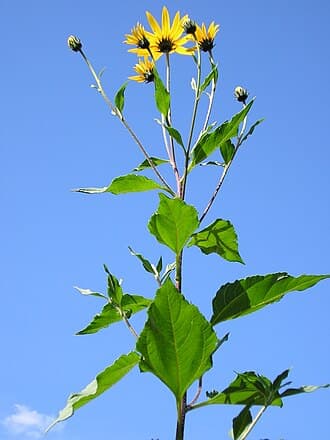
vegetableJerusalem artichokes are hardy perennials grown for their knobby underground tubers, not true artichokes. They are vigorous, sunflower-like plants that produce bright yellow flowers in autumn and are extremely cold-hardy and low-maintenance once established. They spread readily and can become invasive.
Common Problems
Select the problem your Jerusalem Artichoke is experiencing to get a treatment guide.
Care Guide
Toxicity
Jerusalem artichokes are safe; tubers are edible. Raw tubers may cause digestive discomfort in sensitive individuals due to inulin content.
Common Diseases
Common Pests
Seasonal Care
Resume regular watering and feeding as growth picks up.
Peak growing season. Water and feed regularly.
Reduce watering as growth slows. Stop heavy feeding.
Minimal watering and feeding. Protect from frost if needed.
Frequently Asked Questions
Is Jerusalem Artichoke actually related to globe artichokes?
No — despite the name, Jerusalem artichokes are hardy perennials grown for their knobby underground tubers, not true artichokes; they're actually a sunflower relative that produces bright yellow flowers in autumn.
Why is Jerusalem Artichoke considered invasive?
It's extremely cold-hardy, low-maintenance, and spreads readily once established via its tubers — without containment (like a buried barrier or dedicated bed), it can quickly take over garden space.