Nerve Plant
Fittonia albivenis
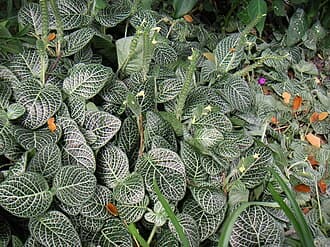
houseplantNerve Plants have striking veined leaves in green and white, pink, or red. They love high humidity and are perfect for terrariums.
Common Problems
Select the problem your Nerve Plant is experiencing to get a treatment guide.
Care Guide
Toxicity
Non-toxic.
Common Diseases
Common Pests
Seasonal Care
Resume regular watering and feeding as growth picks up.
Peak growing season. Water and feed regularly.
Reduce watering as growth slows. Stop heavy feeding.
Minimal watering and feeding. Protect from frost if needed.
Similar Plants
Frequently Asked Questions
Why does my Nerve Plant wilt dramatically and then perk back up?
Fittonia is notorious for dramatic wilting the moment soil dries out even slightly, then recovering fully within an hour of watering. Keep soil consistently moist to avoid this stressful cycle.
Why is my Nerve Plant considered ideal for terrariums?
It thrives in the consistently high humidity and warm, enclosed conditions terrariums provide, which mimics its natural tropical forest-floor habitat far better than typical open-room household air.