Pear Tree
Pyrus communis
treeverifiedReviewed by the GreenScout Team
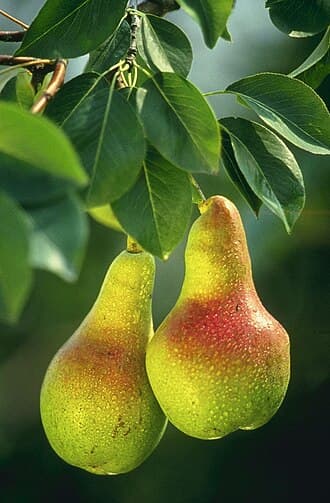
Common pear is a temperate deciduous tree that produces sweet, bell-shaped fruits prized for fresh eating and cooking. Trees grow 15–25 feet tall and develop beautiful white flowers in spring before bearing fruit in summer and autumn. Most pear varieties require a compatible pollinator for reliable fruit production.
Common Problems
Select the problem your Pear Tree is experiencing to get a treatment guide.
Care Guide
light_mode
Light
Full sun (6–8 hours daily) for optimal fruit production and flavor
water_drop
Water
Regular watering during growing season; maintain consistent moisture; reduce in winter dormancy
compost
Soil
Well-draining soil; tolerates various soil types but prefers slightly acidic to neutral pH
science
Fertiliser
Moderate nitrogen in spring; balanced fertilizer annually; avoid excess nitrogen which promotes vegetative growth
thermometer
Temperature
Hardy in cool to moderate climates; requires 200–900 chilling hours depending on variety
humidity_percentage
Humidity
Moderate humidity; adapts well to most climates; benefits from good air circulation to prevent fungal issues
Toxicity
check_circleSafe for Catscheck_circleSafe for Dogscheck_circleSafe for Children
Fruit and leaves are safe; pear seeds contain small amounts of cyanogenic compounds but pose minimal risk
Common Diseases
Common Pests
Seasonal Care
local_floristspring
Resume regular watering and feeding as growth picks up.
light_modesummer
Peak growing season. Water and feed regularly.
ecoautumn
Reduce watering as growth slows. Stop heavy feeding.
ac_unitwinter
Minimal watering and feeding. Protect from frost if needed.
More from GreenScout
assignmentwater_dropmapcomparedangerousarticle
Get a personalised care plan
AI-generated for your plant
Watering calculator
How often should you water?
Find your USDA zone
Check if this plant suits your climate
Compare this plant
Side-by-side with similar species
Toxicity guide
Safe for pets and children?
Plant care articles
Expert guides and how-tos