Sweetpeas
Lathyrus odoratus
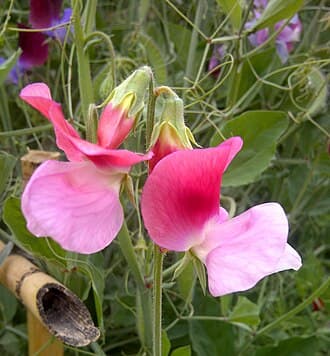
vegetableSweetpeas are climbing or bushy annuals prized for their fragrant, colorful flowers and edible young pods. They are cool-season crops that bloom prolifically when temperatures remain moderate and are excellent for cutting, borders, and vertical structures. The dried seeds are toxic but young pods are edible.
Common Problems
Select the problem your Sweetpeas is experiencing to get a treatment guide.
Care Guide
Toxicity
Seeds and mature pods contain lathyrogens (toxic alkaloids). Young pods are edible but mature seeds are poisonous if ingested. Keep away from children and pets.
Common Diseases
Common Pests
Seasonal Care
Resume regular watering and feeding as growth picks up.
Peak growing season. Water and feed regularly.
Reduce watering as growth slows. Stop heavy feeding.
Minimal watering and feeding. Protect from frost if needed.
Similar Plants
Frequently Asked Questions
Can I eat Sweetpea pods like regular peas?
Only young pods — the dried seeds are toxic, containing lathyrogens (toxic alkaloids), so while young pods are edible, mature seeds must never be eaten and should be kept away from children and pets.
Why are people growing Sweetpeas if the seeds are toxic?
They're prized primarily for their fragrant, colorful flowers rather than as a food crop — excellent for cutting, borders, and vertical structures, blooming prolifically in cool, moderate temperatures.