Sweet Chestnut Fruit
Castanea sativa
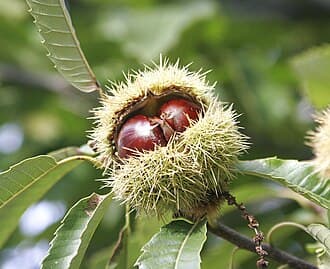
fruitSweet chestnut trees produce large, spiky burrs containing glossy brown nuts prized for their sweet, starchy flavor. These majestic deciduous trees can live for centuries and thrive in well-drained soils with moderate moisture. They require cross-pollination from a compatible variety to produce abundant nuts.
Common Problems
Select the problem your Sweet Chestnut Fruit is experiencing to get a treatment guide.
Care Guide
Toxicity
Sweet chestnuts are edible and non-toxic to all populations when cooked. Raw consumption is safe but less palatable
Common Diseases
Common Pests
Seasonal Care
Resume regular watering and feeding as growth picks up.
Peak growing season. Water and feed regularly.
Reduce watering as growth slows. Stop heavy feeding.
Minimal watering and feeding. Protect from frost if needed.
Similar Plants
Frequently Asked Questions
Why do I need more than one Sweet Chestnut tree?
They require cross-pollination from a compatible variety to produce abundant nuts, so a single isolated tree will bear far fewer chestnuts.
How long does a Sweet Chestnut tree live?
A very long time — these majestic deciduous trees can live for centuries, making them a long-term investment for any garden or orchard.